
Executive Summary
Are existing media measurement practices overlooking a potentially large volume of streaming viewership coming through a network of high traffic third party “re-distribution1” sites?
A third party audience measurement firm reported that 124.9 million viewers watched Super Bowl X on February 8th, 2026 - approximately 2.8 million less viewers than the 2025 Superbowl.
In September 2025, NFL Chief Data and Analytics Officer Paul Ballew claimed that a measurement firm was “underestimating the audience for league games” and that measurement “appears to be underrepresenting the number of people watching games together at home, a ratings category known as “co-viewing”.”
Adalytics Research found over one hundred third party sites and apps which appeared to be “re-distributing” live, official streams of the 2026 Superbowl. Some of these third party “re-distribution” sites and apps generate over twenty million page visits per month, according to data from web analytics company Similarweb. Furthermore, many of these websites appear to generate the majority of their audience traffic in the United States (based on Similar web data).
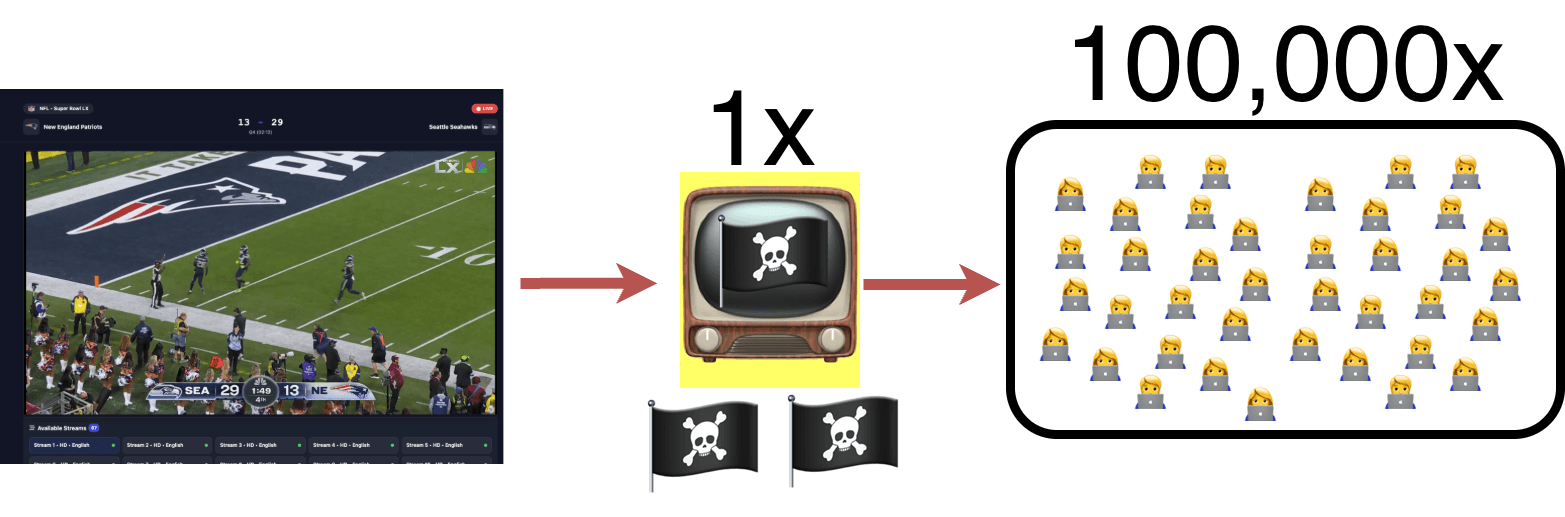
Some of the “re-distribution” sites show how many distinct consumer devices are actively accessing a specific “re-distributed” stream. One singular “re-distribution” stream of an individual consumer’s NBCUniversal Peacock Super Bowl stream was accessed by 121,752 devices. This suggests that a single consumer’s Peacock or other streaming account can be “co-viewed” by hundreds of thousands of distinct devices.
Streams from the NFL, Peacock, ESPN2 Brasil, Fox Sports MX, Sky Sports UK, Channel 5 UK, DAZN, Sport 5 Israel, Polsat Sport, and other providers were observed being “re-distributed” live globally during the 2026 Superbowl.
Given the over 100 sites and apps seen “re-distributing” the 2026 Superbowl, and the fact that some of the individual "re-distributed" streams were accessed were apparently accessed by over 100,000 devices each, this raises the possibility that over 2.8 million consumers may have “co-viewed” the 2026 Superbowl via “re-distribution” services, which could suggest that the 2026 Superbowl did in fact surpass the viewership of the previous 2025 Superbowl - albeit, in a way that was not captured by existing measurements.
On February 10th, 2026, American media audience measurement firm Nielsen released a public statement stating:
“An estimated 124.9 million viewers watched Super Bowl LX on Sunday, February 8, according to Nielsen’s Big Data + Panel measurement. NBC’s presentation of Super Bowl LX ranks as the second most-watched Super Bowl in history, behind the 127.7 million viewers who watched Super Bowl LIX in 2025. This is the first Super Bowl to be reported using Nielsen’s Big Data + Panel measurement methodology, which was officially rolled out in September 2025. Big Data + Panel provides the most-accurate TV measurement to date. [...] Audience estimates are inclusive of Out-of-Home (OOH) and digital viewing (mobile, PC, MVPD app, vMVPD).”
In September 2025, the Wall Street Journal reported that:
“NFL Chief Data and Analytics Officer Paul Ballew said Nielsen is underestimating the audience for league games. Lower numbers can cost the league’s media partners ad revenue and hamper its rights negotiations. “There are millions of viewers that we believe they are systematically undercounting,” Ballew said in an interview with The Wall Street Journal. [...] Ballew also reiterated a longtime concern of the league and networks that Nielsen appears to be underrepresenting the number of people watching games together at home, a ratings category known as “co-viewing. Nielsen stands by its co-viewing measurement, the spokeswoman said, but she acknowledged “we owe the NFL a deeper co-viewing analysis.” [...] “The league is also frustrated, Ballew said, by an increase in delays by Nielsen in releasing data and restatements of ratings, both of which can create uncertainty in the advertising marketplace. [...] Nielsen also said it was the only audience-measurement firm accredited by the Media Rating Council, which sets measurement standards.”
The Wall Street Journal reported that:
“Public criticism of the leading audience-measurement company by a media client, even one as powerful as the NFL, is rare. It shows the challenges in quantifying viewership as the media landscape fragments and more viewers shift to streaming services from traditional broadcast and cable television. [...] Capturing viewers who are now streaming is complicated”.
The February 10th measurement statement that Nielsen posted suggests an decrease of about ~2.8 million viewers in 2026 relative to the 2025 NFL Superbowl.
But what if the number of people who viewed the 2026 Superbowl may have been appreciably higher, specifically due to the “co-viewing” of online streaming services that the NFL’s Chief Data Officer alluded to?
In the weeks leading up to the 2026 NFL Super Bowl, Adalytics was tracking several dynamically evolving networks of hundreds of sites and apps which appeared to be “re-distributing” live sports streams from the NBA, NFL, Premier League, NHL, NCAA, WWE, Nascar, Formula One, and the Winter Olympics. Many of these “re-distributed” sports streams appeared to contain digital watermarks or references to various streaming providers, such as NBCUniversal’s Peacock TV, Disney’s ESPN+, Amazon Prime Video, Fox Sports, Sky Sports (UK), Telemundo, and others.
Some of these “re-distribution” sites posted announcements that the 2026 NFL Super Bowl would be available for viewing.
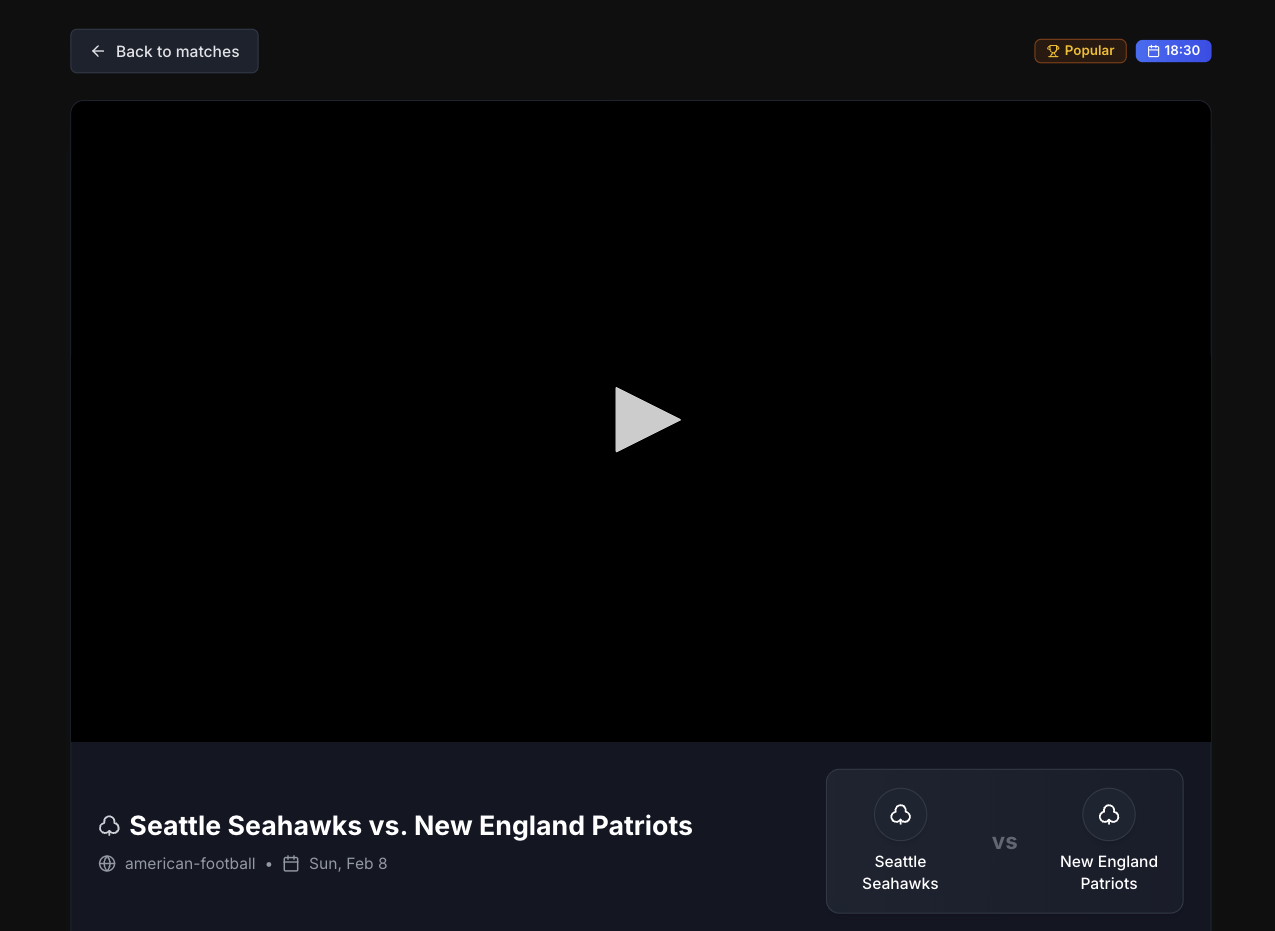
Screenshot of a “re-distribution” website generated a few days before the 2026 NFL Superbowl.
Then, on February 8th, 2026, the “re-distribution” sites began broadcasting the Superbowl in real time. It appears that the “re-distribution” sites were sourcing the streams from various consumer’s Peacock TV accounts in the USA. Some of the streaming sites also made available global access to streams coming from international sports networks, such as Sky Sports UK, Fox Sports MX in Mexico, ESPN Brazil, Polsat in Poland, DAZN in Germany, and Sport 5 in Israel. These international “re-distribution” streams could be viewed by consumers in the USA as well as in other countries.
Screenshot of a “re-distribution” site that generates hundreds of thousands of page visits per month, according to data from Similarweb. 25% of its page visits appear to come from the USA, according to Similarweb.
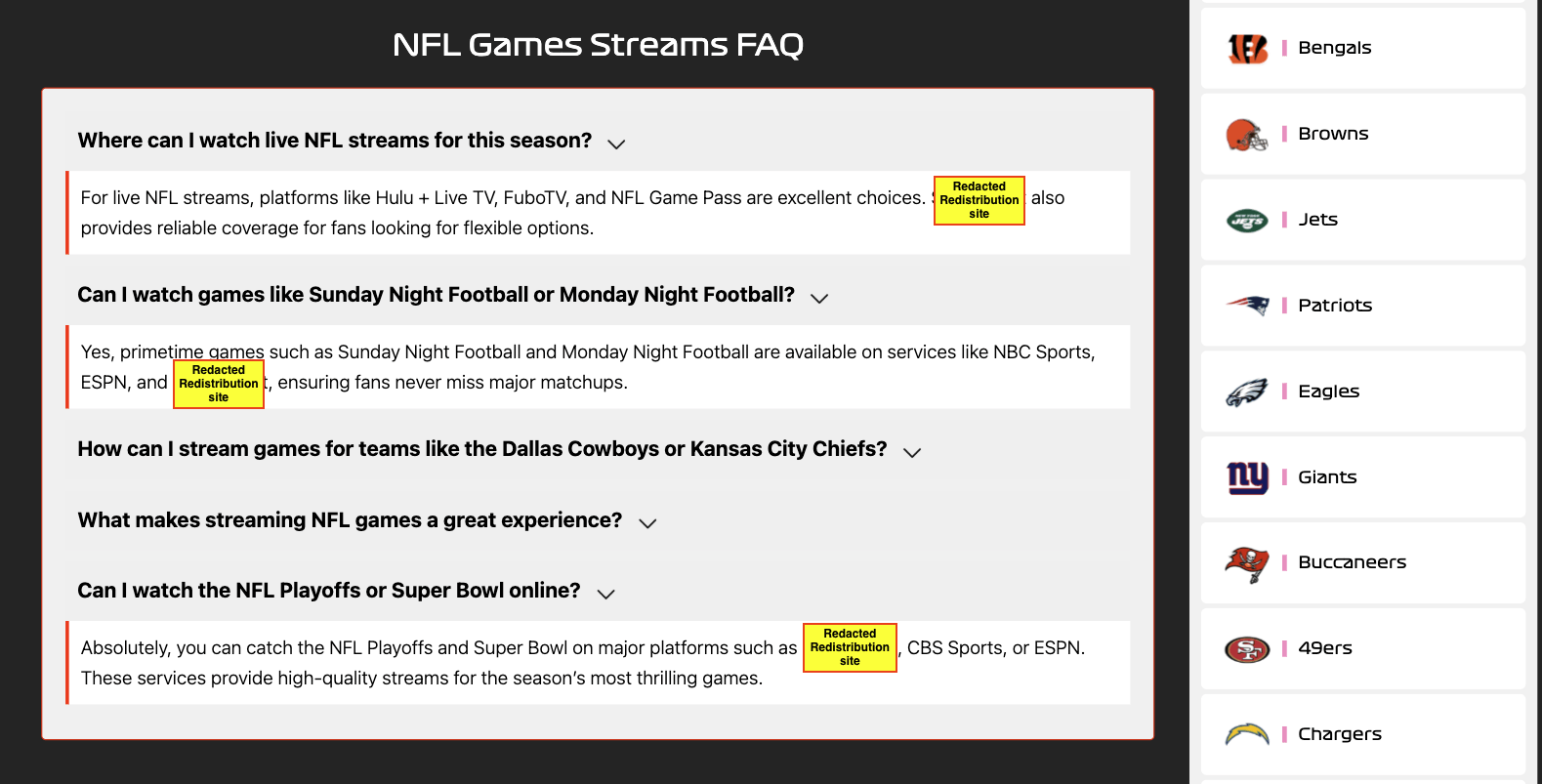
Screenshot of a “re-distribution” site that generates over nineteen (19 million page visits per month, according to data from Similarweb. The re-distribution site mentioned that consumers can watch the NFL Superbowl on the website. 25% of its page visits appear to come from the USA, according to Similarweb.
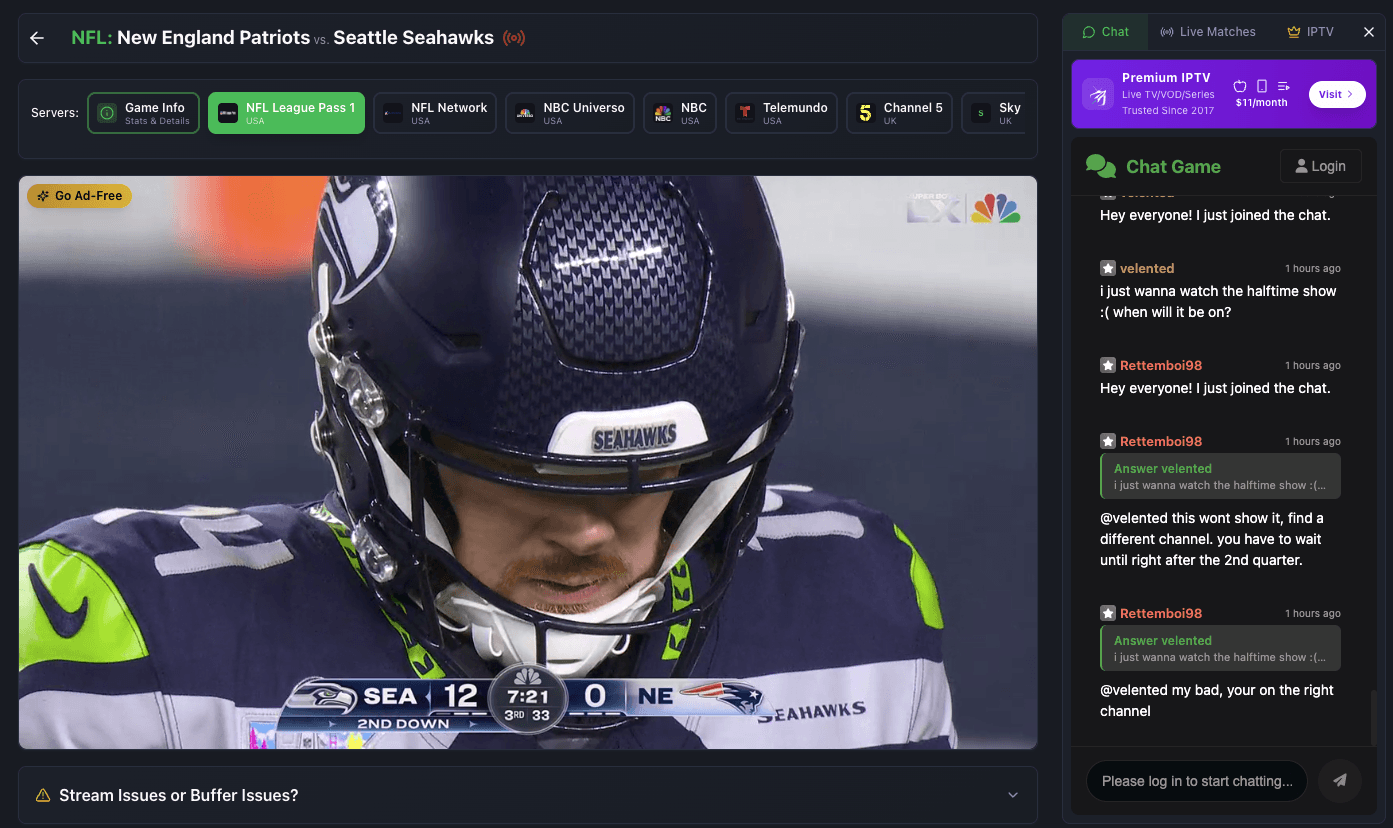
Screenshot of a “re-distribution” site that generates over a million page visits per month, according to data from Similarweb. Note the NBC Universal logo in the top right hand corner of the video stream. The number one source of traffic to the site is viewers in the USA, according to SimilarWeb.
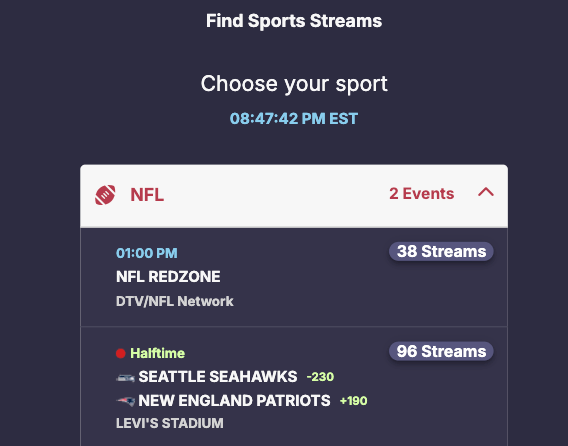
“Re-distribution” website showing dozens of “streams” of the 2026 NFL Superbowl.
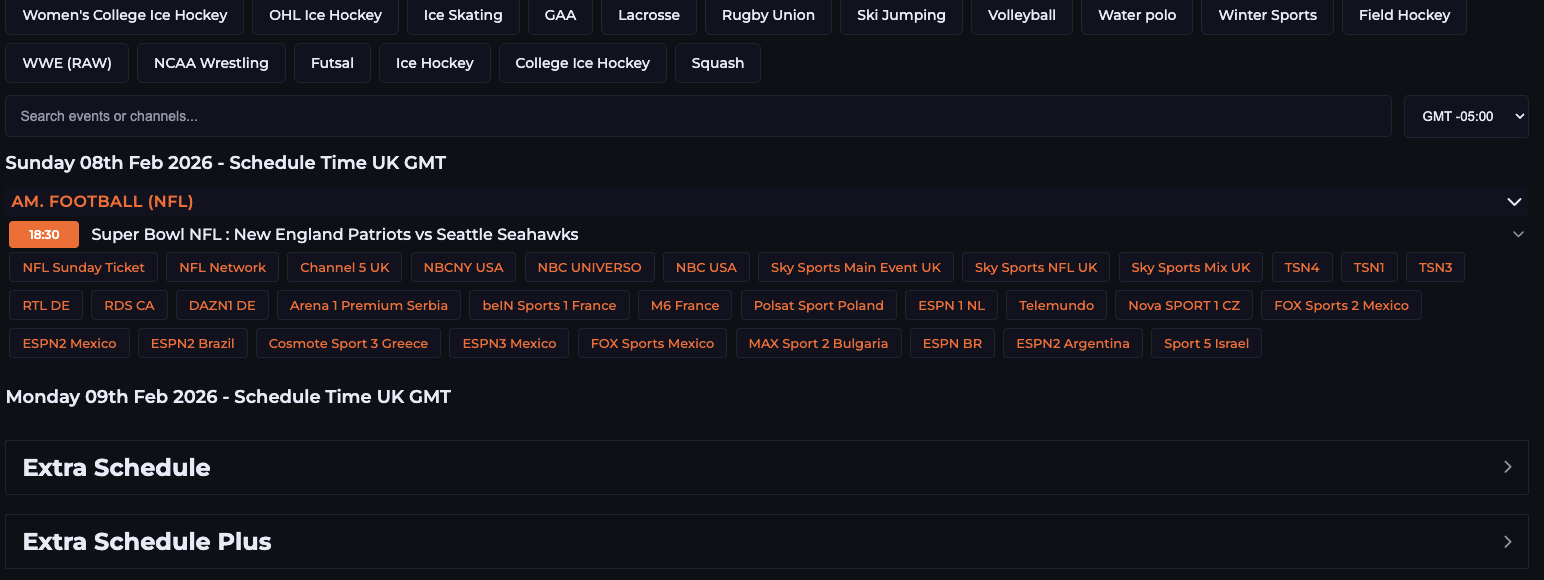
Screenshot of a “re-distribution” site that generates over two million page visits per month, according to data from Similarweb. The site shows streams from NFL Network, NBC Peacock, ESPN2 Brazil, Fox Sports Mexico, Telemundo, DAZN Germany, Sky Sports NFL UK, Channel 5 UK, and Sport 5 Israel. The number one source of traffic to the site is viewers in the USA, according to SimilarWeb.
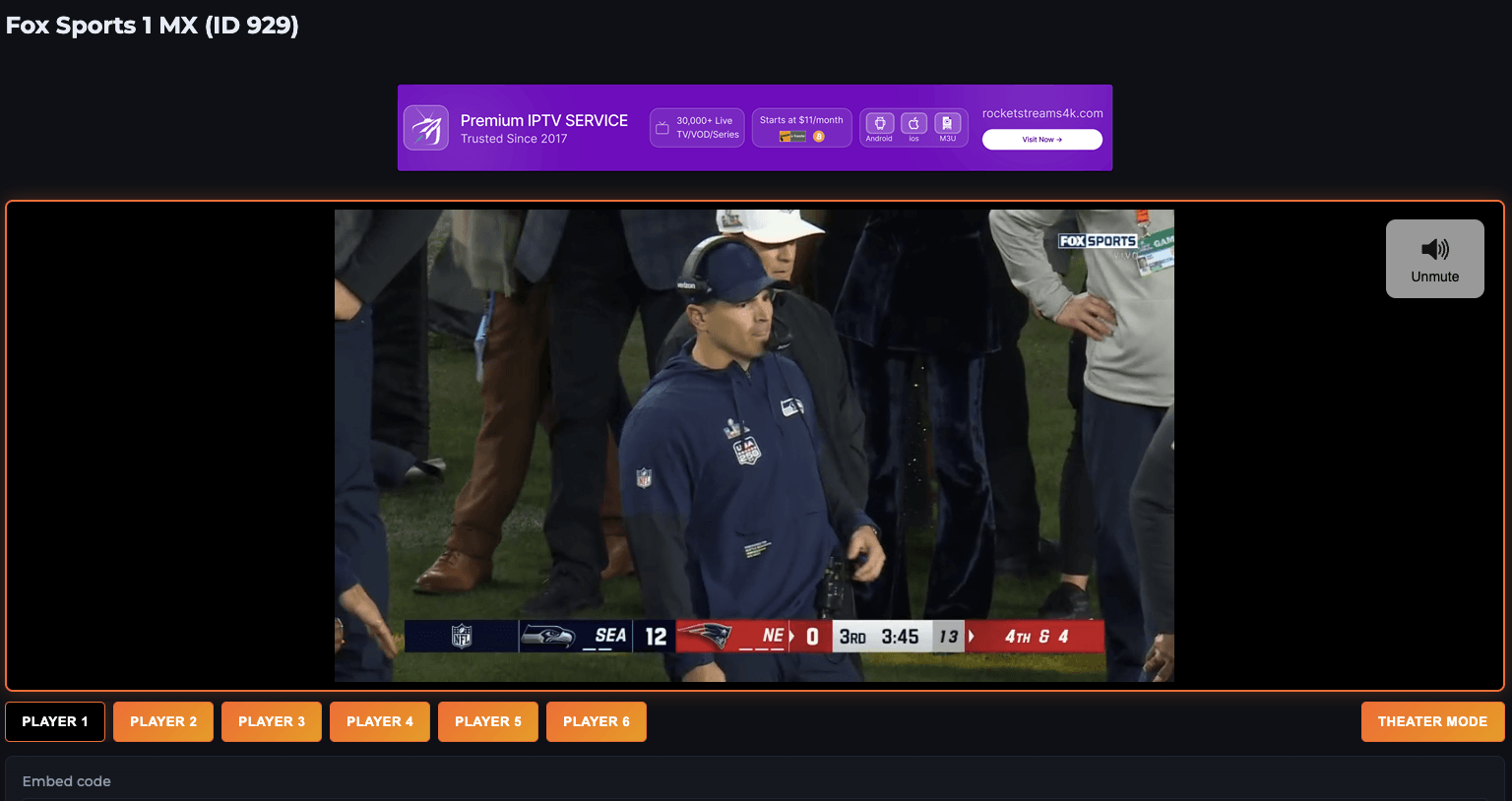
Screenshot of a “re-distribution” site that generates over two million page visits per month, according to data from Similarweb. The screenshot shows a 2026 NFL Superbowl “re-distribution” from Fox Sports MX (Mexico) accessible to consumers located in the USA. The number one source of traffic to the site is viewers in the USA, according to SimilarWeb.
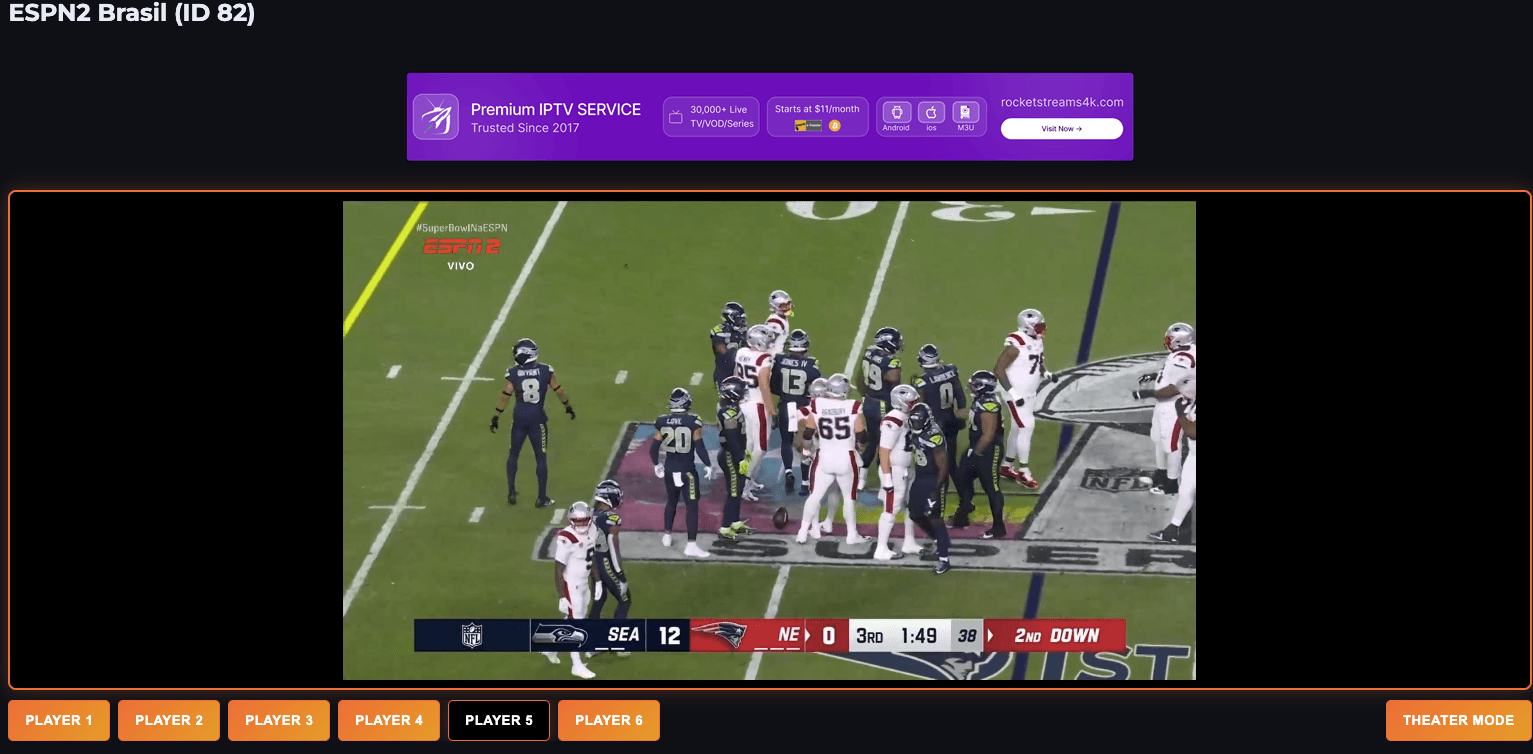
Screenshot of a “re-distribution” site that generates over two million page visits per month, according to data from Similarweb. The screenshot shows a 2026 NFL Superbowl “re-distribution” from ESPN2 Brasil (Brazil) accessible to consumers located in the USA. The number one source of traffic to the site is viewers in the USA, according to SimilarWeb.
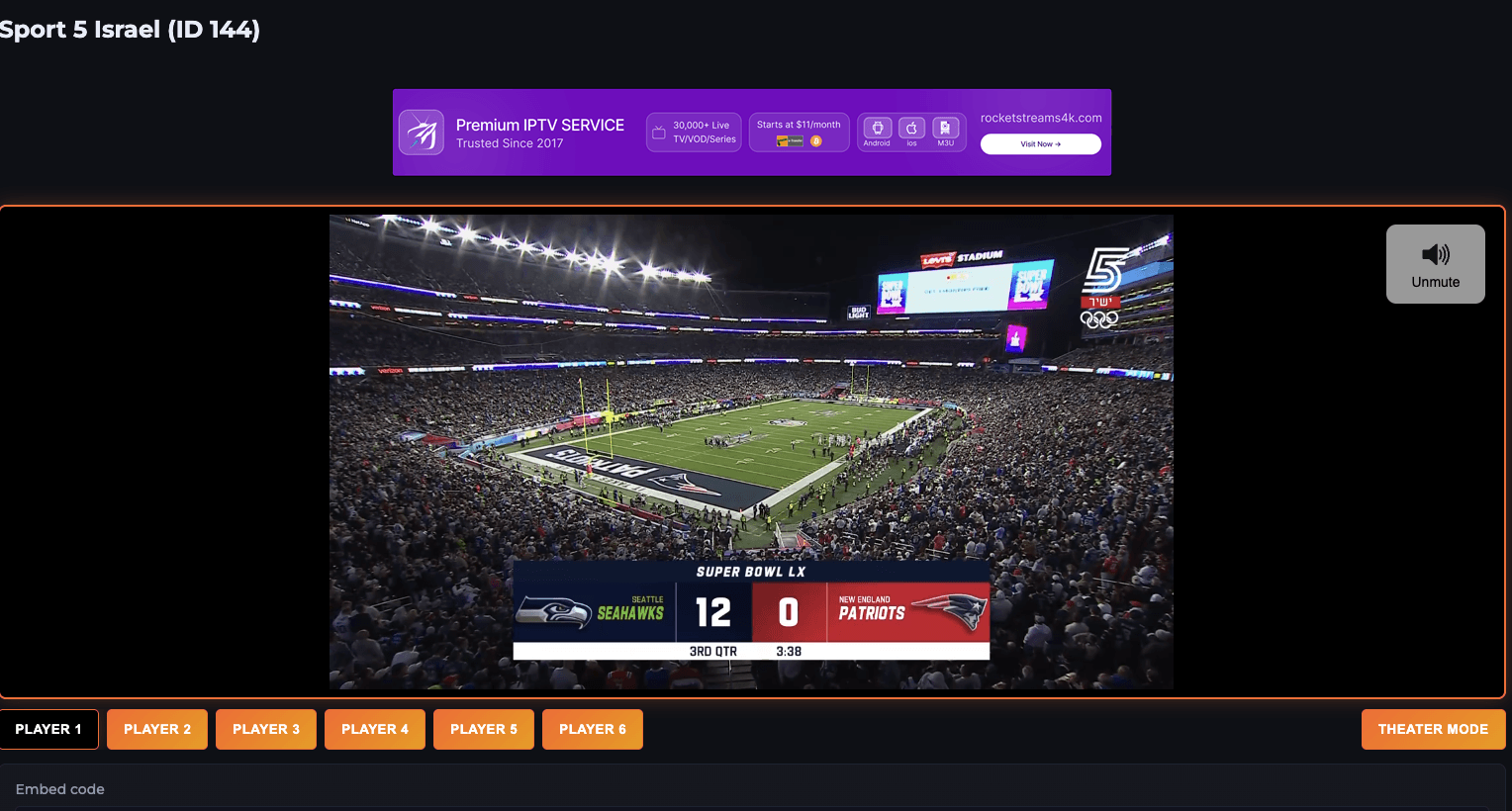
Screenshot of a “re-distribution” site that generates over two million page visits per month, according to data from Similarweb. The screenshot shows a 2026 NFL Superbowl “re-distribution” from Sport 5 Israel accessible to consumers located in the USA. The number one source of traffic to the site is viewers in the USA, according to SimilarWeb.
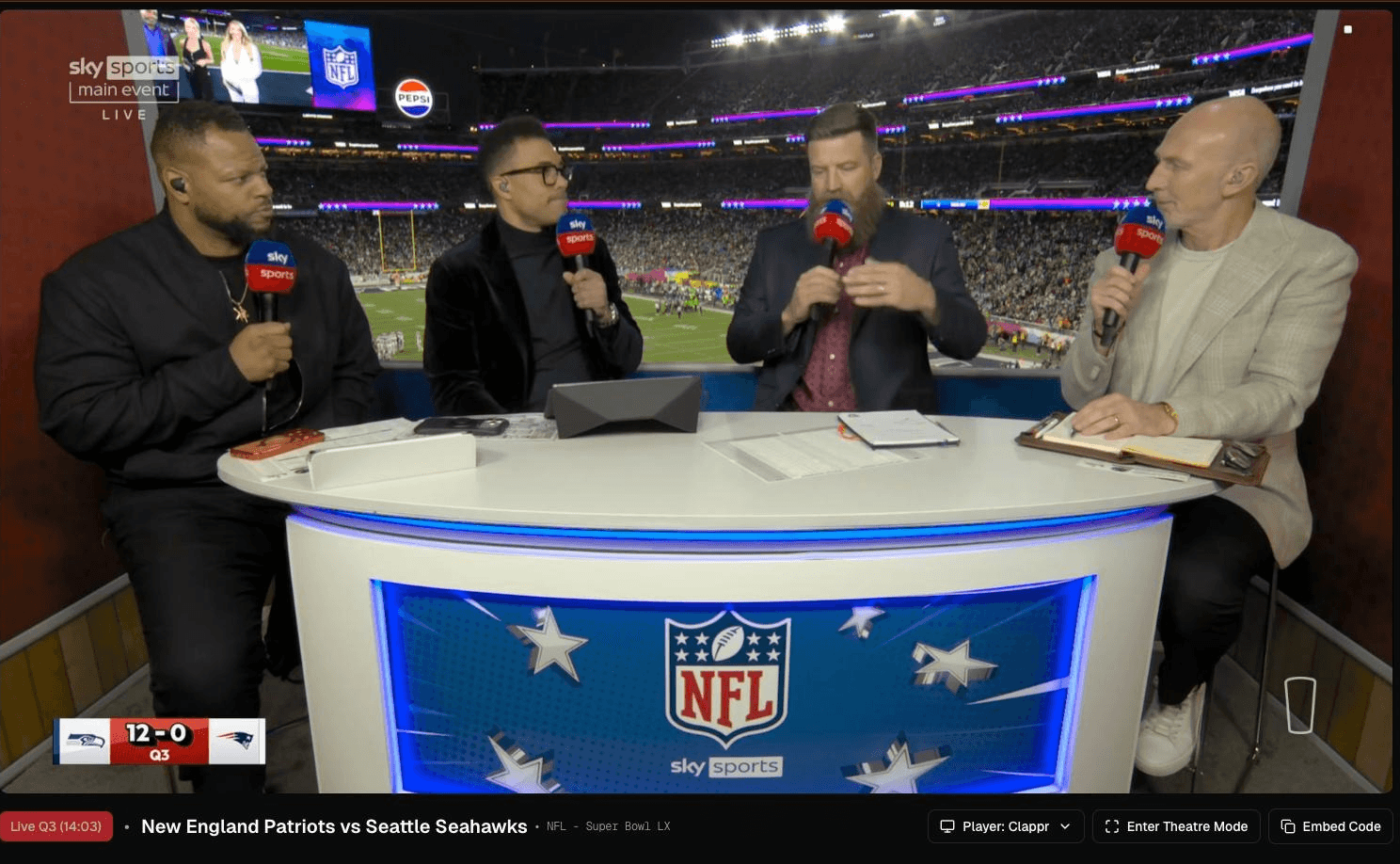
Screenshot of a “re-distribution” site that generates over 1.18 million page visits per month, according to data from Similarweb. The screenshot shows a 2026 NFL Superbowl “re-distribution” from Sky Sports UK accessible to consumers located in the USA. The number one source of traffic to the site is viewers in the USA, according to SimilarWeb.
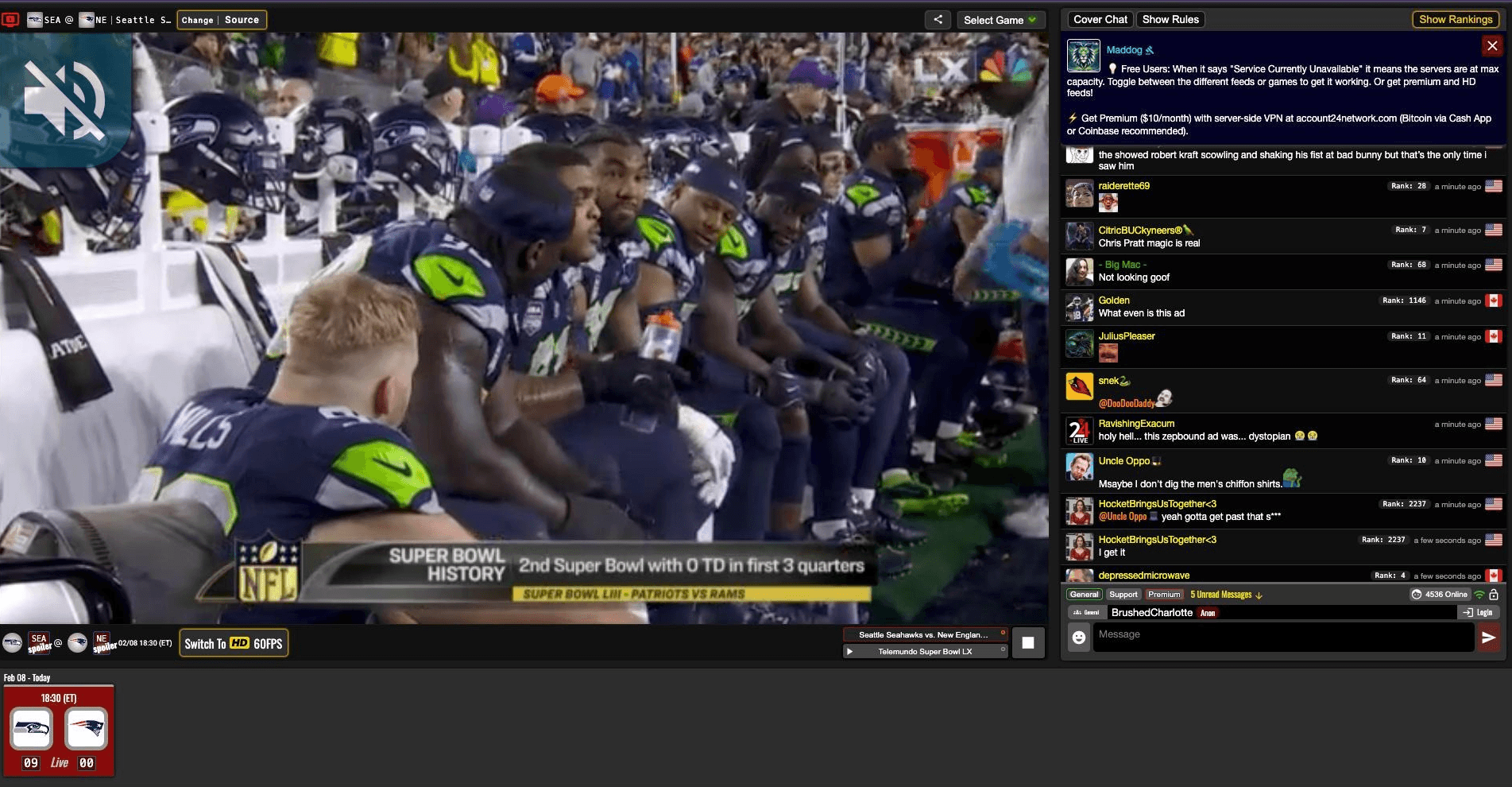
Screenshot of an .ir (Iran) “re-distribution” website, which was observed hosting a Telemundo or NBCUniversal broadcast of the 2026 NFL Superbowl. This website generates over 300,000 page visits per month according to Similarweb. 83% of the site’s monthly page visits are from devices in the USA, according to data from Similarweb.
In the data table below, one can see Similarweb’s reported numbers for how many page visits a given “re-distribution” domain generates in a single month. For example, the first “re-distribution” domain listed in the table reportedly generates over twenty (20) million page visits per month.
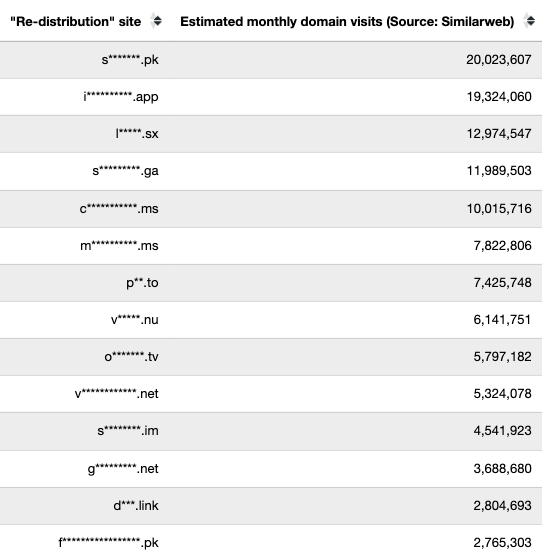
Number of monthly page visits to a selection of “re-distribution” domains, according to data from Similarweb.
Of course, it bears mentioning that total page visits does not equate to number of unique viewers, and not all visitors come to these “re-distribution” pages specifically to view the Superbowl or NFL games. Furthermore, these numbers do not give a quantitative assessment of “co-viewing”.
Some of the “re-distribution” sites or streams appeared to have been viewed simultaneously by over one hundred thousand people each.
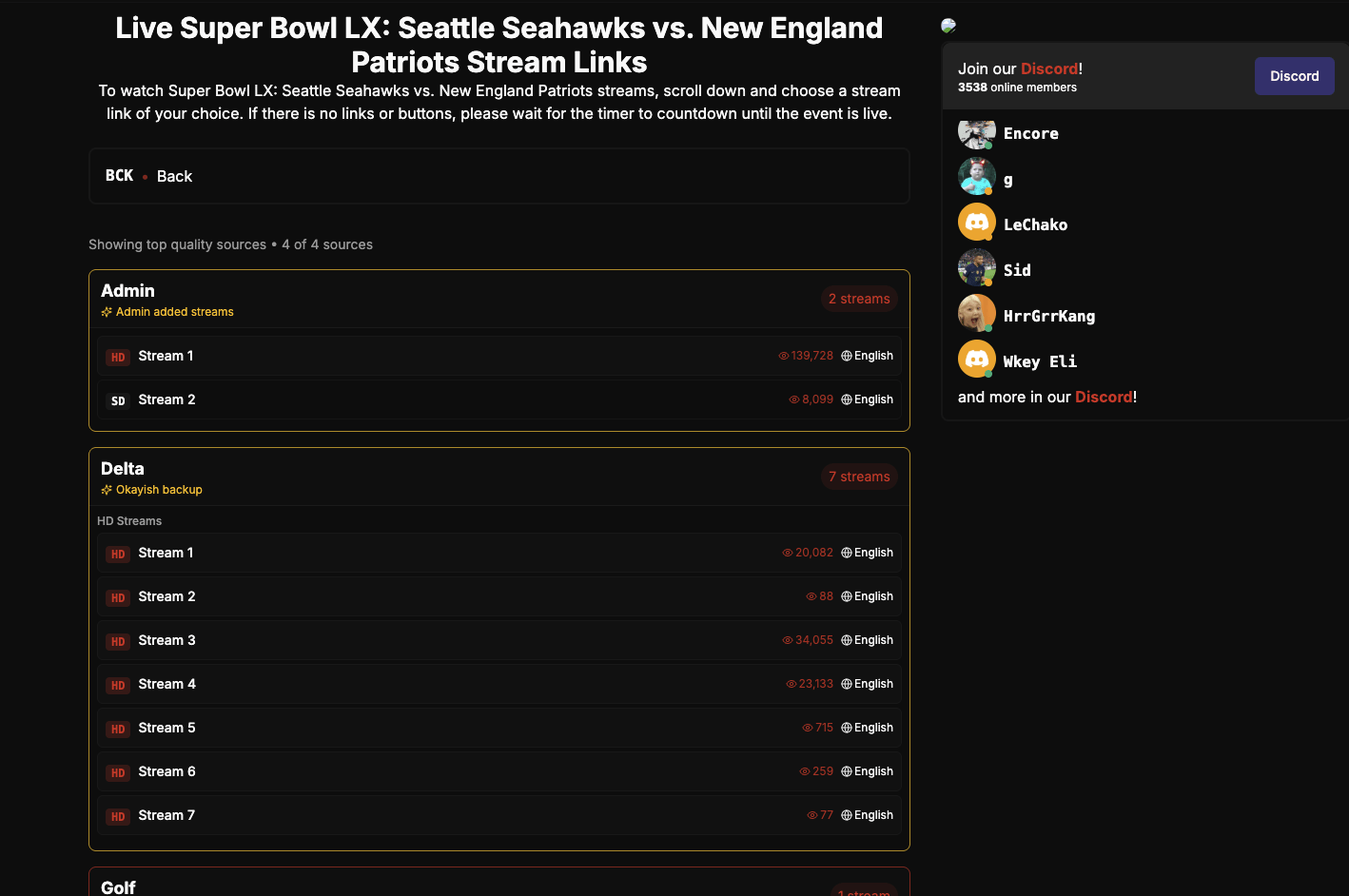
For example, in the screenshot below, one can see several Superbowl streams that were “re-distributed” on a .su (Soviet Union) domain. This domain generates only 792,000 page visits per month, according to data from Similarweb. Yet the site’s metadata shows that one of the streams (“Stream 1”) was being streamed by 121,752 devices (in English) at the time. “Stream 2” was being streamed by 7,098 devices at the time. The “Delta Stream 1” was being streamed by 18,596 devices.
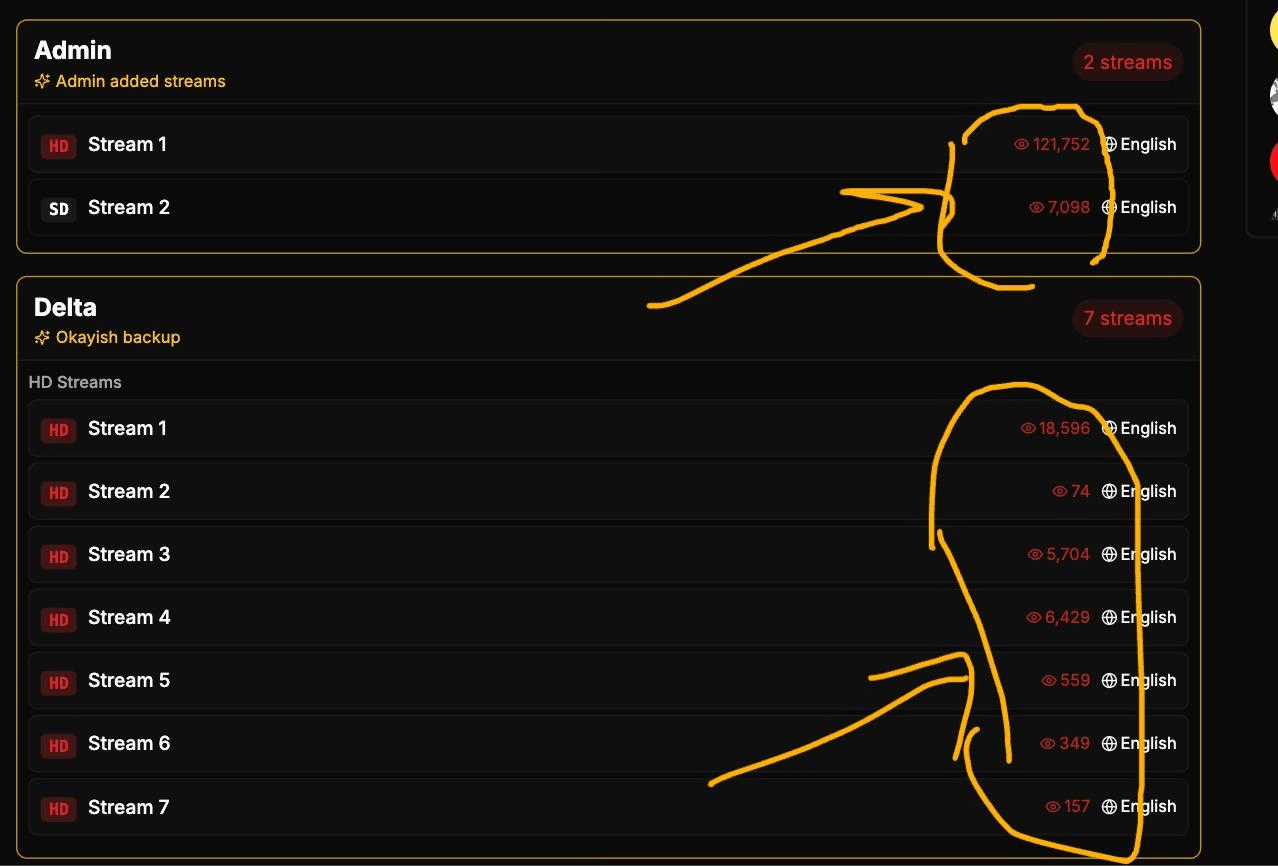
Screenshot of an .su (Soviet Union) “re-distribution” website, which was observed hosting or indexing several 2026 NFL Superbowl stream “re-distributions”. This website generates over 792,000 page visits per month according to Similarweb. The screenshot shows how many devices were allegedly streaming each of the streams offered by the site. “Admin Stream 1” was allegedly streamed by 121,752 devices at one point in time. The number one source of traffic to the site is viewers in the USA, according to SimilarWeb.
Each “stream” appears to be “re-distributed” from a single consumer’s NFL+ Premium, NBC Peacock, Telemundo, Fox Sports MX, ESPN2 Brasil, Polsat Sports, Sky Sports UK, Channel 5 UK, or DAZN streaming account.
But if some of these “re-distributed” streams are being viewed on third party foreign websites by hundreds of thousands of people each, this can potentially significantly inflate the level of “coviewing”, where multiple people are watching the same media device. According to the Wall Street Journal in 2025, NFL Chief Data and Analytics Officer Paul Ballew said “There are millions of viewers that we believe they are systematically undercounting.” [...] Ballew also reiterated a longtime concern of the league and networks that Nielsen appears to be underrepresenting the number of people watching games together at home, a ratings category known as “co-viewing.”
It is unclear whether media or live sports measurement vendors are able to account for situations where a hundred thousand plus individuals can be watching a live sports event “re-distributed” from a single consumer’s streaming account. If anyone from any sports streaming service, sports league, or media measurement entity has further details they’d like to share, please do not hesitate to reach out, as we would love to get your inputs.
The potential impact on advertising and upfronts
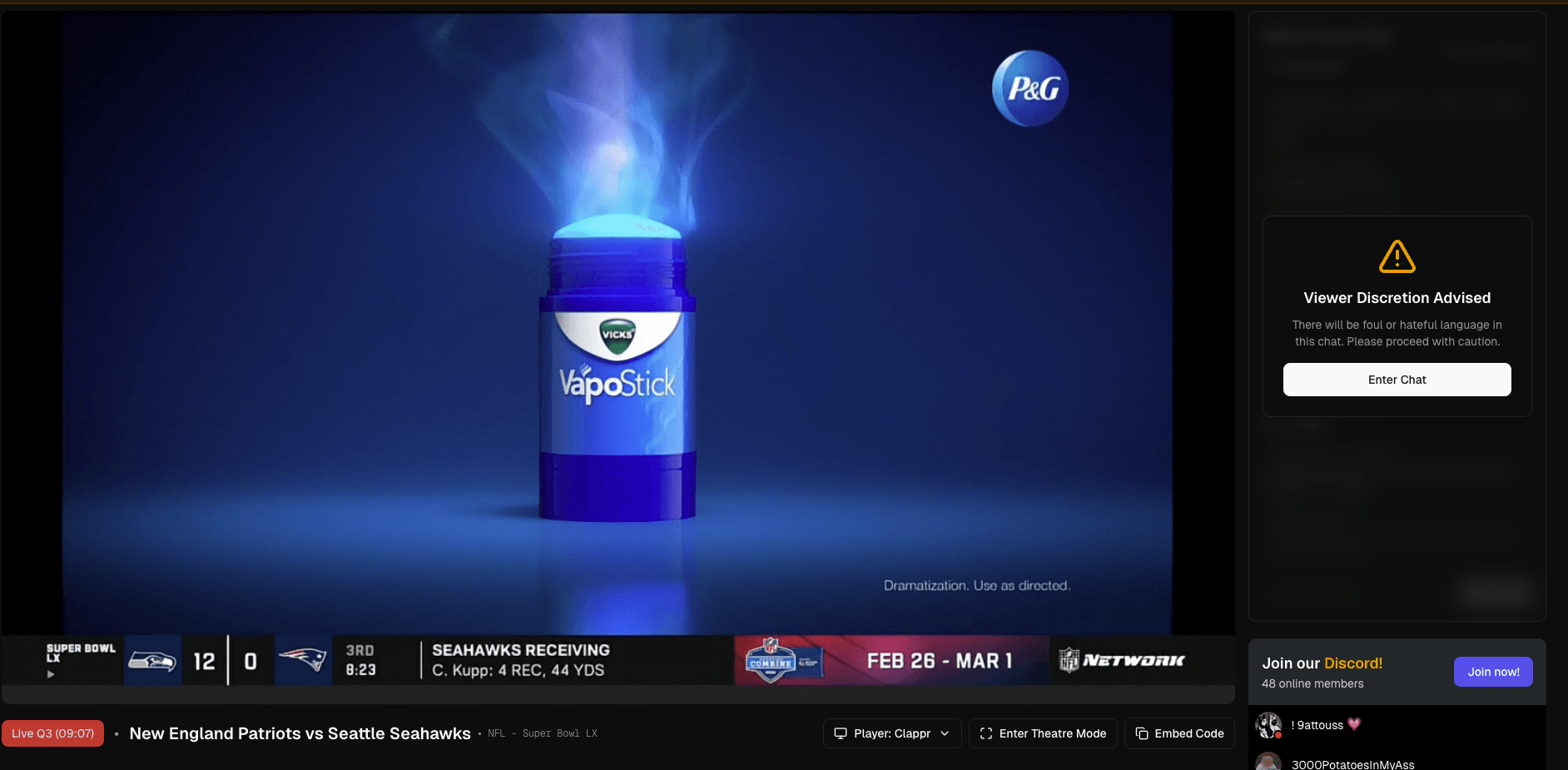
When live sports streams get “re-distributed” to hundreds of thousands of consumers or devices, it appears that the advertising content within the original viewer’s stream gets “re-distributed” as well.
For example, in the screenshot below, one can see a “re-distributed” stream of the Superbowl on a third party. .su (Soviet Union) domain. The stream shows a Procter & Gamble (P&G) VapoStick ad from the original stream viewer’s account
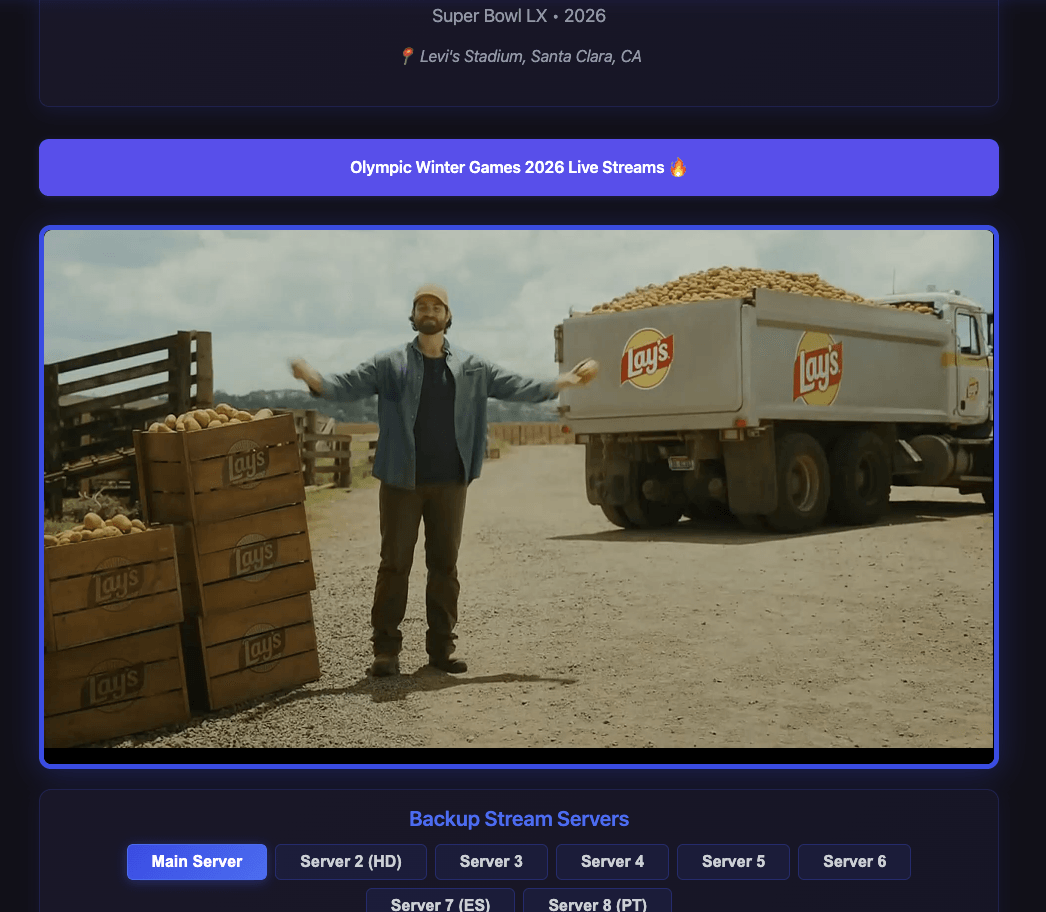
As a second example, in the screenshot below one can see a .ch (Switzerland) domain with a “re-distribution” of an NBCUniversal Peacock stream of the NFL Superbowl. The “re-distribution” appears to also contain a live advertisement for Lay’s potato chips.
Marketing Brew previously reported that: “Nielsen’s “flagship National Television Audience Measurement product lost accreditation in 2021 after the measurement giant acknowledged it undercounted TV viewing audiences in the earliest months of the pandemic, which the MRC estimated could have cost broadcasters hundreds of millions of dollars in lost ad revenue. (That product’s accreditation has since been reinstated.)”
The Wall Street Journal reported that: “Lower numbers can cost the [NFL’s] media partners ad revenue and hamper its rights negotiations. [...] The league has a strong financial interest in making sure all of the audience that has migrated to the services is counted. Audience ratings play an important role in setting the rates that advertisers pay for commercials.”
It is unclear whether current advertising pricing models currently account for situations where a specific ad - such as the P&G ad or Lay’s potato chips ad shown above - is viewed potentially by tens or hundreds of thousands of additional devices which are watching a “re-distributed” video stream. If any advertisers, broadcasters, or measurement entities would like to add additional methodological commentary on this point, please do not hesitate to reach out.
Why are so many people watching live sports through “re-distribution” sites and apps?
One might reasonably ask the question of why so many people would go to the lengths of watching the Superbowl or other live sports events on “re-distribution” sites run by potentially unknown foreign actors. Prior research has noted that some devices used to access “re-distributed” streaming content appear to put consumers at risk, and have been used to commit fraud or to operate botnets.
One possible explanation is that the increasing fragmentation in terms of the number of streaming services consumers have to pay for to access live sports content has increased the incentives for consumers to seek alternative means of viewing live streaming content. There is potentially both a cost factor as well as a consumer experience factor at play here.
The Verge published an article by Janko Roettgers on February 4th, 2026 titled: “Everyone is stealing TV - Fed up with increasing subscription prices, viewers embrace rogue streaming boxes.” The article states: “Walk the rows of the farmers market in a small, nondescript Texas town about an hour away from Austin, and you might stumble across something unexpected: In between booths selling fresh, local pickles and pies, there’s a table piled high with generic-looking streaming boxes, promising free access to NFL games, UFC fights, and any cable TV network you can think of [...] you’ll never have to shell out money for cable or streaming subscriptions again.”
The Verge article states: “Natalie, a California-based software consultant, paid about $120 a month for cable. Then, TV transitioned to streaming, and everything became a subscription. All those subscriptions add up — especially if you’re a sports fan. “You need 30 subscriptions just to watch every game,” she complains. “It’s gotten out of control. It’s not sustainable,” she says.”
On Reddit, a post in the r/NFLNoobs forum note that it would take approximately $130 and multiple service accounts if a fan wanted to watch every regular season NFL game.
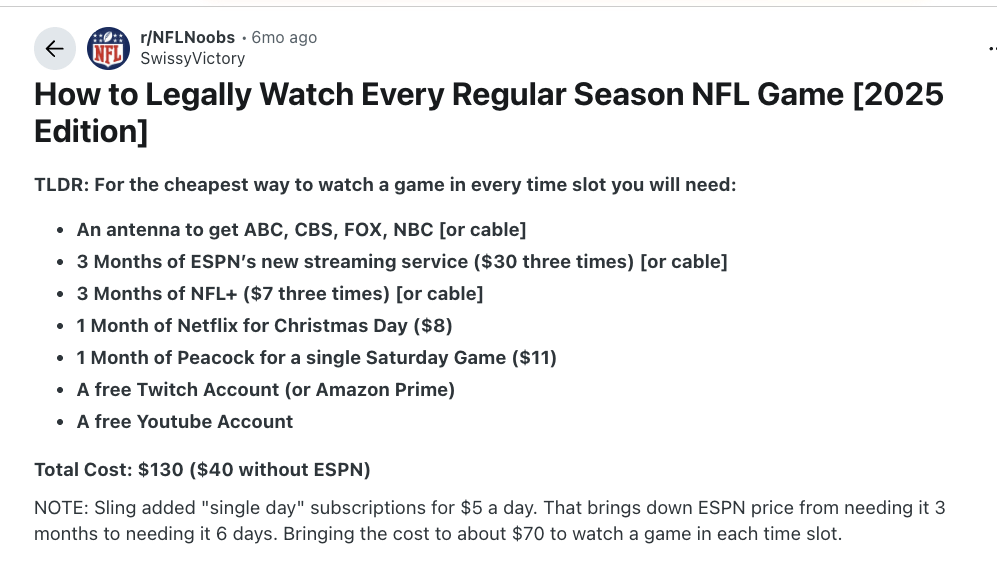
Source: https://www.reddit.com/r/NFLNoobs/comments/1mma16e/how_to_legally_watch_every_regular_season_nfl/
Another Verge article by Janko Roettgers titled: “Sports streaming is a fragmented hot mess - There’s more sports available online than ever, but being a sports fan has never been more complicated”.
The Verge article notes that: “This week, JJ Watt finally had enough. The former NFL star, who played for the Houston Texans for close to a decade, took to X to declare that he was ready to give up on watching Monday Night Football. “Just frustrating,” Watt posted. [...] sports streaming is increasingly fragmented [...] incredibly complex if you’re a hardcore fan dead set on watching every single game of your favorite team and then some. [...] Watt wasn’t having it. “I’m not paying for another streaming subscription,” he pouted.”
The Verge article notes that: “46 percent of consumers believe it’s getting harder to find what they want to watch, according to Gracenote’s report. [...] “Sports suffers from extreme fragmentation due to the complex integration of user entitlements, broadcast rights, and local market availability,” Bell says. [...] JJ Watt was among the many people this week to find out that the monthly fee they pay for ESPN Plus, often as part of a bundle that also includes Hulu and Disney, doesn’t actually give them access to all of ESPN’s Monday Night Football games. For that, they’d have to subscribe to Disney’s new ESPN Unlimited service instead. [...] I can’t watch MNF,” Watt posted on X, adding: “I don’t understand it and quite frankly just don’t really care to figure it out.””
The term “re-distribution” is used instead of “piracy” because Adalytics does not know which parties may have valid content licenses. If anyone from the NFL or other streaming providers would like to provide official confirmation as to whether certain “re-distributions” were authorized or not, please reach out.↩︎